Elections are currently being held in Punjab for District Councils (Zila Parishads) and Block Committees (Panchayat Samitis). Voting for the panchayat elections is scheduled for December 14, and all major political parties have fielded their candidates. Since the next major election after this will be the Punjab Assembly elections in 2027, these local body polls are being widely viewed as the “semi-final” before 2027. The political credibility of parties such as the Aam Aadmi Party (AAP), Congress, BJP, and the Shiromani Akali Dal is at stake.
Elections are taking place for 23 District Councils and 154 Block Committees across the state. A total of 357 District Panchayat member seats are being contested for the District Councils, while 2,863 Block Committee member seats are up for election across the 154 blocks. The elected members of the District Panchayat will subsequently choose the District Council chairpersons, while the 2,863 elected Block Committee members will select 154 Block heads (Block Pramukhs).
District and Block Committee Elections in Punjab
Under Punjab’s local body elections, polls are being conducted to elect representatives to the District Councils and Block Committees. Significantly, 50% of all seats are reserved for women, strengthening women’s representation in grassroots governance.
After a delay of six months, voting will finally be held on December 14 for 357 District Council seats and 2,863 Panchayat Committee seats. These elections are expected to put rural development efforts back on track, as villages will receive proper representation through elected bodies. With this, political competition over village development has heated up once again.
Why Are These Being Called the “Semi-Final of 2027”?
The District Council elections were initially due in May 2025, but have been significantly delayed. Currently, 8,098 candidates are contesting for Panchayat Committee seats, while 1,249 candidates are vying for District Council positions.
Political observers consider these elections a rehearsal for the 2027 Punjab Assembly elections. They are being called the “semi-final” because immediately after these polls, the state heads toward full-scale assembly elections.
Almost two-thirds of Punjab’s assembly seats lie in rural constituencies — areas that are directly influenced by panchayat elections. This makes the outcome of local government races a strong indicator of larger political trends.
Political parties carefully analyze these grassroots results to assess their voter base. On average, votes from four to six district panchayat members combine to influence a single assembly constituency, making these elections a strategic barometer for gauging political strength.
According to political analysts, voting patterns seen at the district panchayat level help all parties understand where they stand heading into the next major electoral battle.
A Bet on Reading the Rural Political Pulse
Political parties use panchayat election results to recalibrate their vote strategies. These polls help them understand regional, constituency-wise, and caste-based voter trends, which shape campaign strategies for the larger state elections.
Punjab’s political landscape for the 2027 Assembly elections is being measured through these local polls. Parties have deployed their full organizational strength to secure early momentum and test ground-level support.
For the state government, the biggest challenge lies in showcasing visible development at the village level before the 2027 elections — and time is limited. Since Punjabi politics is largely shaped in rural areas, the District Council and Block Committee elections have become extremely significant, prompting all parties to invest heavily in campaigning efforts.
How Important Are These Local Body Elections for Each Party?
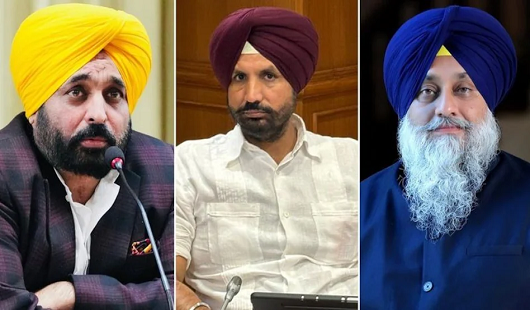
While these elections are important for all political organizations, they are particularly significant for the Congress, BJP, and Shiromani Akali Dal, even more so than for the ruling Aam Aadmi Party (AAP).
AAP is eager to dominate the District Councils and Block Committees to demonstrate that its political grip on Punjab remains strong. Opposition parties, however, argue that AAP is misusing government machinery to influence both the panchayat and district elections.
All major political parties — AAP, Congress, BJP, and Akali Dal — have fielded candidates across Punjab. Congress views the panchayat elections as the starting point for laying the foundation for a comeback to power in 2027, while the BJP and Akali Dal aim to re-establish their rural influence and measure their organizational strength ahead of the state elections.
For this reason, the panchayat elections have become a matter of political prestige for every party involved.